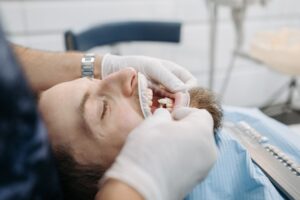
Halitosis, commonly known as bad breath, can happen occasionally after certain foods or when you wake up in the morning. However, persistent bad breath that continues despite brushing may indicate an oral health problem that needs attention.
Many halitosis causes begin inside the mouth. Plaque, bacteria on the tongue, gum disease, tooth decay, dry mouth, and dental infections can all contribute to unpleasant breath. Other lifestyle or medical factors may also play a role.
Understanding what causes halitosis breath is important because simply masking the smell with gum or mouthwash does not necessarily solve the underlying problem.
What Is Halitosis (Bad Breath)?
Halitosis is the medical term for persistent unpleasant breath.
Almost everyone experiences temporary bad breath occasionally. Strong foods, coffee, smoking, dehydration, or waking after several hours of sleep can temporarily change the way breath smells.
Chronic halitosis is different.
When unpleasant breath continues regularly or repeatedly returns despite normal oral hygiene, the underlying cause should be investigated.
In many cases, the problem begins inside the mouth. Bacteria can accumulate on the teeth, gums, tongue, dental restorations, or oral appliances and produce odor-causing compounds.
What Are the Main Halitosis Causes?
There are several possible halitosis causes, but oral conditions are among the most common.
Potential causes include:
- Plaque buildup
- Poor oral hygiene
- Bacteria on the tongue
- Gum disease
- Tooth decay
- Dental infections
- Dry mouth
- Smoking and tobacco use
- Strong-smelling foods
- Poorly cleaned dentures or orthodontic appliances
- Some medications
- Tonsil stones
- Certain nose, throat, digestive, or medical conditions
Determining the underlying cause is important because the appropriate treatment varies considerably.
For example, someone with plaque and tartar buildup may benefit from professional teeth cleaning, while a patient with periodontal disease requires treatment directed at the gums.
If what you’re experiencing sounds familiar, early diagnosis can save you time, discomfort, and more complex procedures.
- Accurate diagnosis by dental specialists
- Advanced technology and modern equipment
- Personalized treatment plans
لو الأعراض اللي بتقرأ عنها حاسس إنها شبه اللي بتمر بيه، التشخيص المبكر بيوفر عليك وقت، تعب، وإجراءات أكبر ممكن تحتاجها بعد كده.
- تشخيص دقيق على يد أطباء متخصصين
- أحدث الأجهزة والتقنيات
- خطة علاج مناسبة لكل حالة
What Causes Bad Breath from the Mouth?
A large proportion of persistent bad breath starts in the mouth.
Bacteria naturally live around the teeth, gums, and tongue. When food debris, plaque, and bacteria accumulate, they can produce volatile sulfur compounds that create an unpleasant smell.
The back of the tongue can be particularly important because its uneven surface can trap bacteria and food debris.
Dental conditions such as cavities, gum disease, infected teeth, or poorly cleaned dentures can also contribute.
Persistent bad breath should therefore be evaluated alongside overall oral health rather than treated only as an odor problem.
Why Is Bad Breath Worse in the Morning?
Morning breath is common because saliva production decreases while you sleep.
Saliva normally helps wash away food particles and control bacteria inside the mouth.
When saliva flow decreases overnight, bacteria can multiply more easily and produce stronger odors.
Morning breath may be more noticeable in people who:
- Sleep with their mouth open
- Snore
- Are dehydrated
- Smoke
- Drink alcohol before sleeping
- Have persistent dry mouth
If the odor improves soon after drinking water, brushing, and cleaning your tongue, it is usually temporary.
Persistent morning bad breath that continues throughout the day may require further investigation.
What Does Halitosis Breath Smell Like?
There is no single smell associated with halitosis.
The odor depends partly on its cause.
Some people describe halitosis breath as:
- Rotten or sulfur-like
- Sour
- Metallic
- Musty
- Unpleasantly sweet
- Similar to rotten eggs
Bacterial activity inside the mouth can produce sulfur-containing compounds responsible for many common bad breath odors.
However, smell alone cannot reliably identify the underlying condition.
If bad breath continues despite good oral hygiene, a dental examination is more useful than trying to diagnose the cause based on odor.
Can You Smell Your Own Halitosis?
Not always.
People often become accustomed to smells they experience continuously, including their own breath.
This can make it difficult to accurately assess whether you have halitosis.
Breathing into your hand is also not a particularly reliable test.
You may instead notice:
- A persistent unpleasant taste
- A coated tongue
- Dry mouth
- Comments from someone close to you
- Bad breath that returns shortly after brushing
A dentist can assess your teeth, gums, tongue, plaque levels, and other possible oral causes when persistent halitosis is suspected.
How Do You Get Rid of Halitosis?
The best way to get rid of halitosis is to identify and treat its cause.
For many people, treatment begins with improving oral hygiene.
This may include:
- Brushing twice daily
- Teeth Cleaning, especially cleaning between the teeth
- Cleaning the tongue
- Drinking enough water
- Cleaning dentures or retainers properly
- Attending professional dental cleanings
- Treating gum disease or tooth decay
- Avoiding smoking
If bad breath originates from a dental problem, treating that problem is more effective than repeatedly masking the odor.
What Is the Best Way to Treat Halitosis?
There is no single treatment that works for every case.
When plaque or tartar is responsible, professional cleaning combined with better home care may significantly improve breath.
If gum disease is present, periodontal treatment may be required.
If tooth decay, a damaged restoration, or dental infection is contributing to the odor, the affected tooth needs appropriate treatment.
Dry mouth may require hydration, saliva-supporting measures, medication review, or other treatment depending on the cause.
Persistent halitosis that is not related to the mouth may require evaluation by another healthcare professional.
What Is the Fastest Way to Improve Bad Breath?
For temporary bad breath, you can often improve the smell quickly by:
- Brushing your teeth
- Cleaning your tongue
- Flossing
- Drinking water
- Removing trapped food
- Using an appropriate mouthwash
- Chewing sugar-free gum
However, these measures are not necessarily a permanent solution.
Mint, gum, and cosmetic mouthwash may temporarily cover an unpleasant smell without removing the underlying cause.
If bad breath repeatedly returns, the focus should shift from masking the odor to identifying what is producing it.
Can Halitosis Be Cured Permanently?
Halitosis can often be controlled or resolved when the underlying cause is identified and successfully treated.
For example, bad breath caused by plaque accumulation may improve after professional cleaning and consistent oral hygiene.
Bad breath related to gum disease may improve when periodontal inflammation and bacterial buildup are controlled.
Similarly, treating tooth decay, infection, or persistent dry mouth can improve breath when those conditions are responsible.
However, there is no universal permanent cure for every type of halitosis.
The long-term result depends on the cause and whether that cause continues or returns.
Good oral hygiene and regular dental examinations are therefore important even after the breath improves.
Can Gum Disease or Dry Mouth Cause Halitosis?
Yes.
Both conditions can contribute significantly to persistent bad breath.
Gum Disease
Plaque bacteria can accumulate around and beneath the gumline.
As gum disease progresses, deeper periodontal pockets may develop around the teeth. These areas can trap bacteria and become difficult to clean through normal brushing.
Persistent bad breath or an unpleasant taste may therefore occur alongside:
- Bleeding gums
- Swollen gums
- Gum recession
- Tooth sensitivity
- Loose teeth
If you experience these symptoms, read more about gum disease and its treatment at Perfect Smile.
Dry Mouth
Saliva helps cleanse the mouth and remove particles that contribute to odor.
When saliva production decreases, bacteria and food debris can accumulate more easily.
This is why xerostomia, or persistent dry mouth, is commonly associated with bad breath.
Dry mouth may result from medications, dehydration, mouth breathing, smoking, certain medical conditions, or salivary gland problems.
Patients experiencing dryness alongside persistent bad breath may benefit from reading Perfect Smile’s guide to xerostomia and dry mouth.
How Can You Prevent Halitosis?
Preventing halitosis begins with maintaining a clean and healthy mouth.
Brush your teeth at least twice daily using fluoride toothpaste and clean between your teeth every day.
Cleaning the tongue is also important because bacteria and debris often accumulate on its surface.
Other useful habits include:
- Drink sufficient water
- Attend regular dental checkups
- Schedule professional cleaning when needed
- Clean dentures and retainers thoroughly
- Avoid tobacco products
- Limit foods that repeatedly trigger bad breath
- Address persistent dry mouth
- Treat cavities and gum problems early
Mouthwash can provide additional support, but it should not replace brushing, interdental cleaning, or professional dental care.
When Should You See a Dentist?
Occasional bad breath after eating certain foods or waking in the morning is usually not concerning.
You should consider seeing a dentist when bad breath:
- Continues despite regular brushing and flossing
- Returns soon after cleaning your teeth
- Is accompanied by bleeding gums
- Occurs with gum swelling or recession
- Is associated with tooth pain
- Comes with a persistent bad taste
- Occurs alongside dry mouth
- Is accompanied by pus or signs of infection in the gum.
A dentist can examine your teeth, gums, tongue, restorations, and oral tissues to determine whether the problem begins inside the mouth.
If no dental cause is found, you may be advised to consult another healthcare professional to investigate other possibilities.
Whether you need a routine checkup or a specialized dental procedure, you can visit the nearest clinic in one of our prime locations.
- Experienced dental specialists
- Multiple clinic locations
- Flexible appointment scheduling
سواء كنت محتاج كشف دوري أو إجراء علاجي متخصص، تقدر تحجز وتزورنا في أقرب عيادة لك وفي الموعد الي يناسبك.
- أطباء أسنان بخبرة عالية
- أكثر من فرع لسهولة الوصول
- مواعيد مرنة تناسب يومك
At Perfect Smile Dental Center, a dental assessment can help identify whether persistent bad breath is related to plaque buildup, gum disease, dry mouth, tooth decay, or another oral condition.
Treating the underlying problem is more effective than simply masking the smell.
Persistent bad breath can be more than a confidence issue; it may signal gum disease, dry mouth, plaque buildup, decay, or another oral condition. Book a consultation at Perfect Smile Dental Center to identify the real cause of halitosis and receive a personalized treatment plan designed to improve your oral health and keep your breath fresher for longer.
Frequently Asked Questions About Halitosis
Does Halitosis Ever Go Away?
Yes, halitosis may go away when its underlying cause is corrected.
Temporary bad breath often resolves after cleaning the mouth, drinking water, or allowing odor-producing foods to leave the body.
Persistent halitosis may require professional treatment if it is related to tartar, gum disease, cavities, infection, or dry mouth.
If the cause remains untreated, bad breath may continue or repeatedly return.
Why Do I Have Bad Breath After Brushing?
Brushing only cleans some of the surfaces where odor-producing bacteria can accumulate.
You may still experience bad breath after brushing if bacteria remain:
- Between the teeth
- Along the gumline
- Under tartar deposits
- On the tongue
- Inside periodontal pockets
- Around infected or decayed teeth
Dry mouth can also cause persistent bad breath even when the teeth are regularly brushed.
Professional dental cleaning may be necessary when hardened tartar is present because brushing cannot remove it.
Is Morning Breath Normal?
Yes. Mild morning breath is very common.
Saliva production naturally falls during sleep, allowing bacteria to build up more easily.
Morning breath should generally improve after drinking water, brushing, cleaning your tongue, and starting your normal daily routine.
If the smell remains strong throughout the day or repeatedly occurs alongside dry mouth, gum bleeding, pain, or other oral symptoms, a dental assessment is recommended.
Sources & References
- What Is Halitosis? / What Are the Main Halitosis Causes? / Why Is Bad Breath Worse in the Morning?
Mayo Clinic – Bad Breath: Symptoms and Causes
https://www.mayoclinic.org/diseases-conditions/bad-breath/symptoms-causes/syc-20350922
- How Do You Get Rid of Halitosis? / What Is the Best Way to Treat Halitosis?
Mayo Clinic – Bad Breath: Diagnosis and Treatment
https://www.mayoclinic.org/diseases-conditions/bad-breath/diagnosis-treatment/drc-20350925
- What Does Halitosis Breath Smell Like? / Can You Smell Your Own Halitosis? / Can Halitosis Be Cured Permanently?
Cleveland Clinic – Halitosis (Bad Breath)
https://my.clevelandclinic.org/health/diseases/17771-bad-breath-halitosis
- Halitosis Breath / Mouthwash / How Can You Prevent Halitosis?
American Dental Association – Mouthrinse (Mouthwash)
https://www.ada.org/resources/ada-library/oral-health-topics/mouthrinse-mouthwash
- Can Dry Mouth Cause Halitosis? / Why Do I Have Bad Breath After Brushing?
American Dental Association – Xerostomia (Dry Mouth)
https://www.ada.org/resources/ada-library/oral-health-topics/xerostomia